🔥 Buy 1 Course, Get 1 FREE · Limited time00d 00h 00m 00s
ADFM Certification

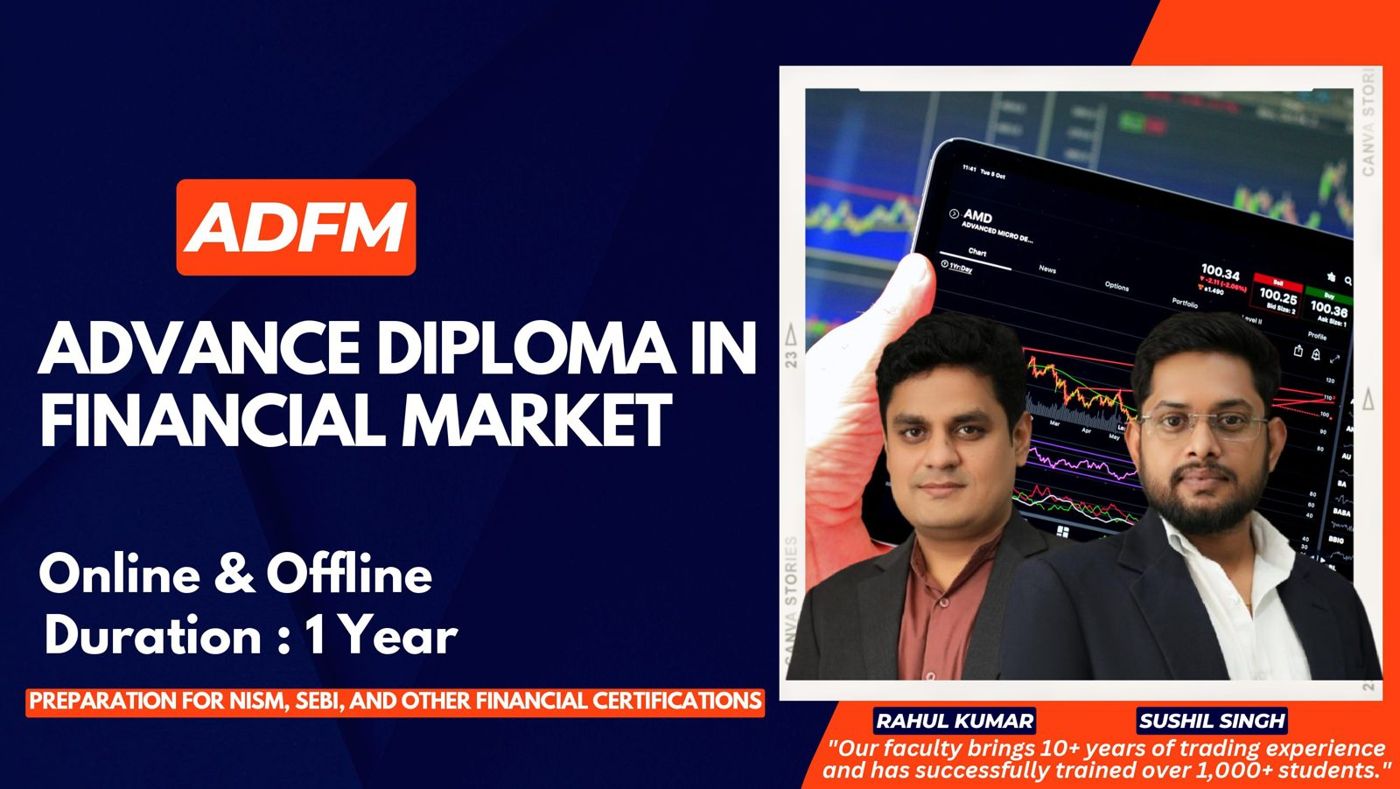
Advanced Diploma in Finance Markets 1-Year Program

★★★★★ 4.9 (193 Ratings) · 243 Google reviews

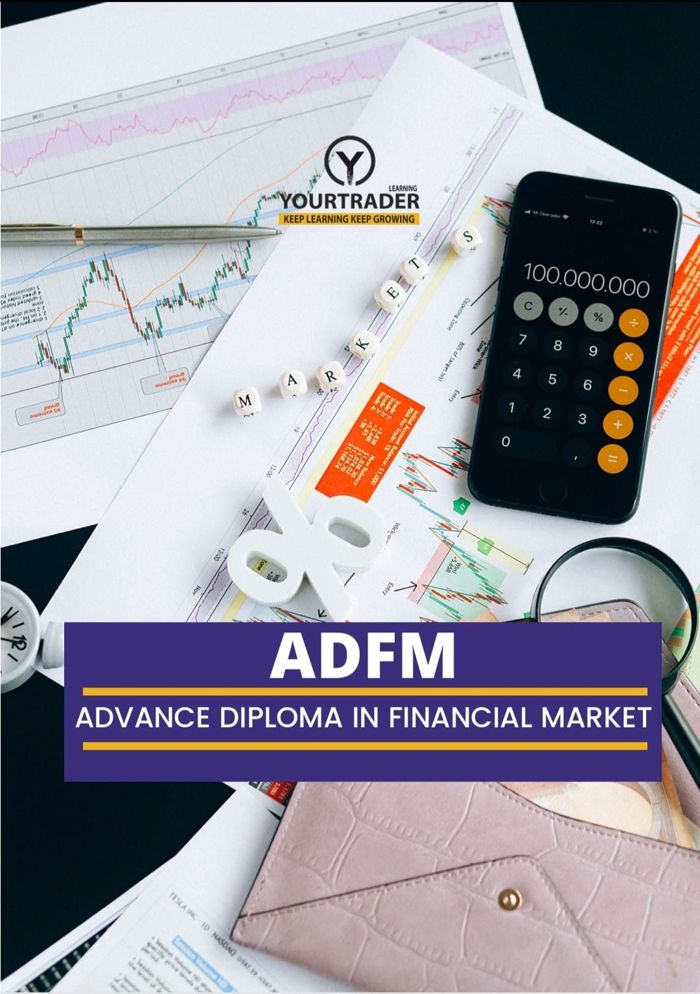
The Advanced Diploma in Financial Markets (ADFM) is designed to help learners gain in-depth knowledge of the share bazaar, trading strategies, investment analysis, and risk management.
Skills you will gain
Equity & Commodity AnalysisAdvanced Technical & Derivative AnalysisFundamental AnalysisInvestment AdvisoryResearch AnalysisMutual Funds
Great for
Job SeekersBeginnersPro TradersStudentsCareer GrowthNISM & NCFM CertificationsSEBI Certification Aspirants
  • Industry-Recognized Certification
  • Expert Mentorship (10+ years market experience)
  • Hands-on Practical Learning with Live Charts
See full syllabus
Program overview

What's in the Advanced Diploma in Finance Markets Program?

The Advanced Professional Market Program covers advanced trading strategies, risk management, and wealth creation techniques, while also opening career opportunities in brokerage firms, banks, and financial institutions, helping learners boost their skills. The program blends theory with practical market exposure, ensuring participants are job-ready and industry-recognized. It includes 8 professional market modules, covering everything in DIFM — Equity, Derivatives, Technical Analysis, Fundamental Analysis, Commodities, and Currency — plus advanced modules such as Research Analyst, Investment Advisor, and Mutual Fund Distributor.

Learners also receive NISM certification and advanced licensing preparation, with mock tests, live case studies, and complete guidance for Research Analyst, Investment Advisor, and Mutual Fund certifications. The career-focused curriculum is designed for those aiming to build careers in advisory, research, fund management, and portfolio consulting roles. With live projects, practical assignments, and internship assistance, this program is India’s most comprehensive financial market diploma, equipping learners with the skills needed to go beyond trading and become professional market experts.

◆

7 Professional Market Modules Covers everything in ADFM

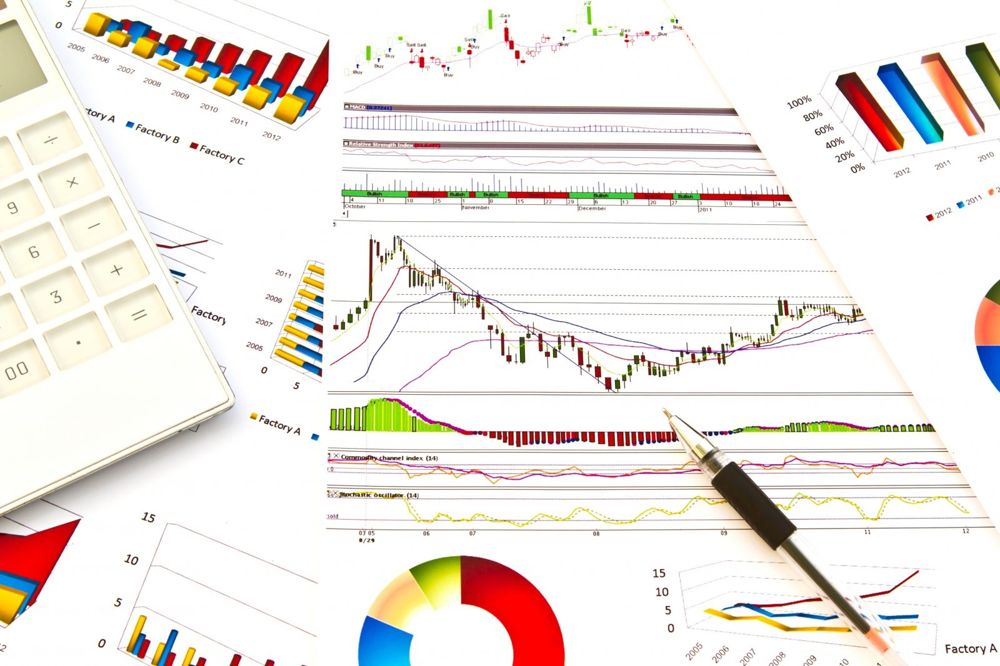
Equity, Derivatives, Technicals, Fundamentals, Commodities & Currency — plus advanced professional modules: Research Analyst, Investment Advisor, and Mutual Fund Distributor.
▲

Career-Focused Professional Curriculum

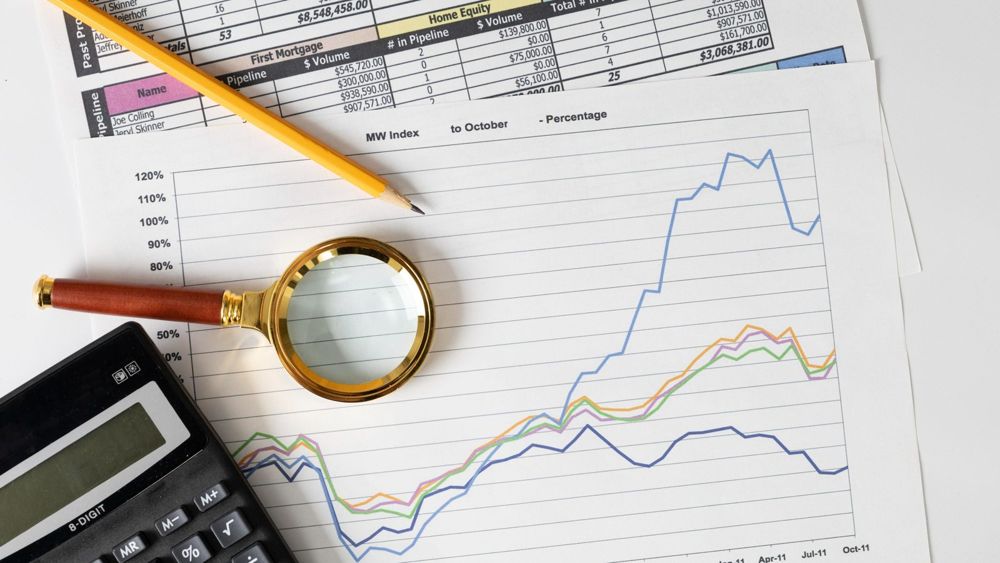
Designed for those aiming to build careers in advisory, research, fund management, and portfolio consulting roles.
★

India’s Most Comprehensive Financial Market Diploma

Learn, practice, and apply — from classroom to corporate — with live projects, practical assignments, and internship assistance.
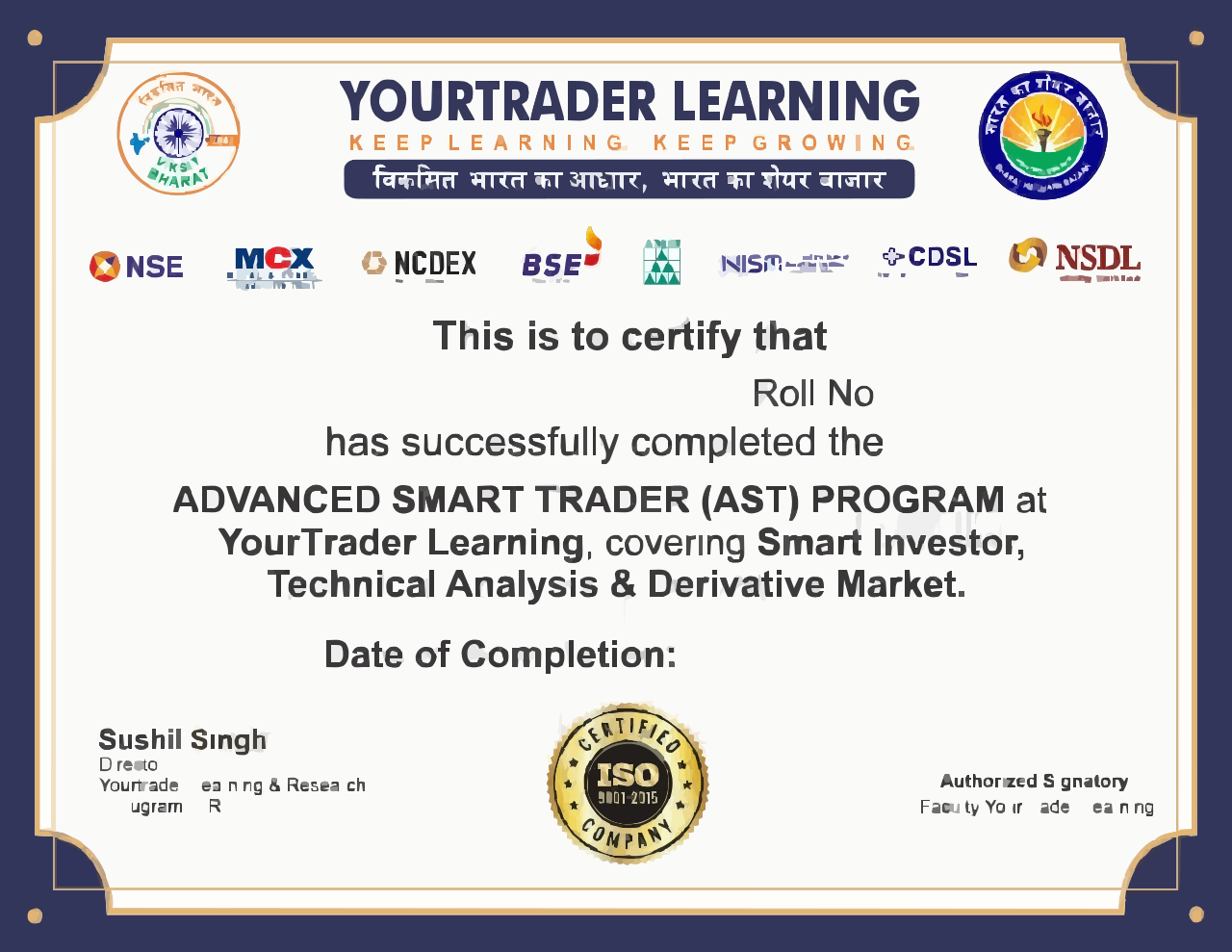
Industry-Recognized Certification

Get a verified certificate to boost your trading career and portfolio.
Course gallery

A look inside ADFM

ADFM course banner
ADFM course card
Syllabus

Modules in this course

57 modules · tap any module to see topics
introduction to investment & financial products
  • Basics of Investment
  • Investment Avenues
  • Investment Quotes
  • Why Invest in the Stock Market ?
overviews of indian financial markets
  • Financial System & Securities
  • Equity Shares, Debentures, Bonds, ETFs, Mutual Funds
  • Primary & Secondary Market
  • IPO, FPO, Right Issue, Book Building
  • Market Index, Depository, Market Capitalisation
trading membership
  • Stock Broker & NSE Membership
  • Sub Broker & Client–Broker Relationship
  • Trading Mechanism: Online, Auction & Retail Debt Market
trading
  • Order Management, Market Phases, Price Bands, Circuit Breakers
  • How Stock Exchanges Operate ?
  • Order Types and Trade Execution
  • Market Indices and Benchmarks
  • Short Selling, Margin Trading, and Leverage
clearing settlement and risk management
  • Securities and funds settlement
  • Shortages handling
  • Risks in settlement
  • Risk management
  • International Securities Identification Number (ISIN)
  • Data and report downloads
fundamental valuation concepts
  • Time Value of Money
  • Understanding Financial Statements
legal framework
  • Market Regulator & Major Legislations
  • SCRA 1956, SEBI Act, Depository Act, Contract Act, Income Tax Act
introduction & classification
  • Commodity Markets
  • Commodity Indices
  • Commodity Futures
  • Commodity Options
commodity segments
  • Metals: Gold, Silver, Copper
  • Non-Metals: Industrial Metals and Minerals
  • Agricultural Commodities: Wheat, Corn, Soybeans
  • Non-Agricultural Commodities: Cotton, Rubber
  • Energy Markets: Crude Oil, Natural Gas, Renewable Energy Sources
time zones and global commodity markets
  • Impact of Different Time Zones on Trading
  • International Market Dynamics
  • Trading Across Global Markets
factors & trading tips
  • Factors Affecting Commodity Prices
  • Tips for Doing Commodity Trading
uses of commodity derivatives
  • Hedging and Risk Management
  • Speculation and Arbitrage Opportunities
  • Portfolio Diversification Benefits
trading mechanism
  • Mechanisms of Margin Maintenance
  • Mark-to-Market Settlement System
  • Trading System in Commodity Derivatives Exchanges
clearing, settlement and risk management
  • Understanding the Delivery Process
  • Entities Involved in the Clearing and Settlement Process
  • Explanation of the Margining Mechanism
legal and regulatory environment
  • Regulatory Framework for Commodity Trading
  • Compliance Requirements and Best Practices
  • Understanding Market Surveillance and Enforcement
type of chart
  • Introduction about chart
  • Various types of price chart
  • Line chart
  • Bar chart
    Candlestick chart
  • Kagi chart
  • Point & figure chart
  • Ranko chart
  • Three line break chart
trendline
  • What is the purpose of drawing trend lines?
  • How to plot trend lines?
how to plot trend lines candlestick study ?
  • One candlestick pattern
  • Doji
  • Hammer
  • Hanging man
  • Inverted hammer
  • Shooting star
  • Spinning top (bullish & bearish)
  • Marubozu (bullish & bearish)
  • Double candlestick pattern
  • Bullish engulf & bearish engulf
  • Bullish harami & bearish harami
  • Piercing pattern & dark cloud cover
  • Tweezer top & tweezer bottom
  • Triple candlestick pattern
  • Morning star & evening star
  • Three white shoulders & three black crows
  • Abandoned body (bullish & bearish)
  • Tsauki gap (bullish & bearish)
  • Five candlestick pattern
  • Rising three methods
  • Falling three methods
support & ressistance
  • What is support?
  • What is resistance?
  • Change of support to resistance and vice versa
charts patterns and their study
  • FOUR STAGES:
    Accumulation, Markup, Distribution and Panic Liquidation
  • ELEMENTARY TRENDS:
    Uptrend
    Downtrend
    Range Bound Trend
  • CHART PATTERNS
    Head & shoulder, Inverted head & shoulder, Double top, Double bottom, Flag & pennant, Symmetrical triangles, Ascending triangles, Descending triangles, Wedge patterns, Rounding top & rounding bottom, Cup & handle, Bullish rectangles Bearish rectangles, Triple top, Triple bottom
gaps & gaps analysis
  • TYPES OF GAPS:
    Common gap,
    Breakaway gap,
    Runaway gap,
    Exhaustion gap,
    Island cluster
oscillators &indicators
  • What does a technical indicator offer?
  • Why use indicators?
  • Types of indicators:
    Leading indicator
    Lagging indicator
moving averages
  • Simple moving average
  • Exponential moving average
  • What is better?
  • When to use?
  • Uses of moving averages:
  • Signals moving average price over
  • Signals multiple moving averages
    Support & resistance levels
macd
  • What is the macd and how is it calculated?
  • Macd benefits
  • Divergence
relative strength index
  • What is momentum?
  • Calculation of the rsi
  • Divergence
on balance volume
  • Overview
  • Calculation
stochastic
  • Overview
  • Construction
  • Slow stochastic
  • Fast stochastic
  • Signals
  • Difference between slow & fast stochastic
william %r
  • Overview
  • Signals
  • Divergence
bollinger bands
  • Few rules for beginners
money flow index
  • Overview
  • Signals
  • Divergence
elliot waves theory
  • Definition of elliot waves
  • Elliot waves theory
introduction to fundamental analysis
  • Fundamental Analysis and Equity Research
  • Sector Analysis
  • Industry Analysis
  • Company Analysis
  • Factors of Fundamental Analysis
  • Balance Sheet
  • Income Statement
  • Cash Flow Statement
  • Practical Example of Income Statement
  • Important Part in Annual Report
ratio analysis
  • Introduction to Ratios
  • Liquidity Ratios
  • Cash Conversation Cycle
  • DSO DIO DPO
  • Solvency Ratios
  • Profitability Ratios
  • Du- Pont Analysis
  • Operating Leverage
  • Financial Leverage
  • Common Size Analysis
equity valuation
  • Introduction to Valuation
  • Concept of Risk Return
  • Valuation of Shares
  • Free Cash Flows
  • DCF Method
  • DDM Method
  • Estimating Cost of Capital
  • Relative Valuation
  • Practical Example of Relative Valuation
company growth analysis
  • Top Line Analysis
  • Operating and non operating Analysis
  • Finance Costs & Bottom line
  • Sales Growth Analysis
  • Measuring Financial Health of a company
  • Company Costs Analysis
  • Practical Example of Relative Valuation
introduction to indian financial market
  • Overview
  • Understand the macro-economic parameters of Indian Economy
  • Understand the features of Indian Financial Markets
  • Know the structure of Indian Financial Markets
  • Understand the role of the participants in the Indian Financial Markets
securities market segments
  • Understand the nature, functions and types of issues in Primary Markets
  • Know the role and function of Secondary Markets
  • Understand the various types of various Corporate Actions
mutual funds
  • • Understand the meaning and features of a mutual fund
  • Know the key terms and concepts associated with mutual funds
  • Know the regulatory framework for mutual funds
  • Know the various types of mutual fund products
  • Understand the taxation of Mutual Fund Products
  • Know the investment options in mutual funds
  • Know the processes associated with investing in mutual funds
  • Understand the uses and processes of conducting systematic transactions
  • List the benefits of investing with mutual funds
investment products
  • Understand the various types of small savings instruments
  • Understand the various types of fixed income / debt instruments
  • Know the various types of alternate investments
  • Know the concept of direct equity as an investment option
managing investment risk
  • Know the concept of Risk
  • Know the Common Types of Risk
  • Understand the ways of measuring risk
measuring investment returns
  • Understand the concept of return
  • Understand the various return concepts
  • Understand the concept of compounding
  • Know the computation of Real rate of return vs. nominal return
  • Know the computation of Tax adjusted return
  • Understand the concept of Risk-adjusted Returns
concept of financial planning
  • Understand what constitutes financial planning
  • Know the need for financial advisory services
  • Understand the scope of financial advisory services
  • Understand the business model for the delivery of financial advice to client
  • Understand assets, liabilities and net worth
  • Understand the preparation of budget
  • Know the financial planning delivery process
iasset allocation and investment strategies
  • Know the various Asset classes Learn about Portfolio construction
  • Understand the concept of Practical asset allocation and Rebalancing Strategies
  • Know the need for portfolio monitoring and re-balancing
insurance planning
  • Understand the need for insurance in personal finance
  • List the requirements for a risk to be insurable
  • Understand the role of insurance in personal finance
  • Know the various steps involved in Insurance Planning
  • Know the types of Insurance Products
  • Understand about the Life Insurance Products
  • Understand about the Non-Life Insurance Products
  • Understand the life insurance needs analysis (Human life approach, Needs approach)
retirement planning
  • Understand the retirement planning process
  • Understand and estimate retirement corpus
  • Determine the retirement corpus
  • Learn about the various retirement products and their features
tax and estate planning
  • Understand Income tax principles
  • Understand Tax aspects of Investment products
  • Learn about the Wealth Tax Act and its implication for clients
  • Know about Estate Planning
regulatory environment and ethical issues
  • Understand the provisions of the SEBI (Investment Advisers) Regulations, 2013
  • Understand the overall framework of the regulatory system
  • Learn about the roles of regulators: MoF, MCA, SEBI, RBI, IRDA, PFRDA
  • Understand the role of Self-regulatory organizations
  • Understand the provisions of PMLA, 2002Know the codes of conduct by SEBI, AMFI, etc
  • Know the ethical issues in providing financial advice
  • Understand investor complaint redressal mechanism
introduction to research analyst profession
  • Understand the Primary role of a Research Analyst
  • Know the Primary responsibilities of a Research Analyst
  • Know the Basic principles of interaction with Companies / Clients
  • Understand the Important qualities of a Research Analyst
introduction to securities market
  • Know about “Securities” and “Securities Market”
  • Understand Product Definitions / Terminology
  • Know the Structure of Securities Market
  • Know Various market participants and their activities
  • Learn about the Kinds of transactions
  • Know about Dematerialization and Rematerialization of securities
terminology in equity and debt markets
  • Know about the Terminology in Equity Market
  • Know about the Terminology in Debt Market
  • Understand the Types of Bonds
fundamentals of research
  • Learn about investing
  • Understand the Research on businesses or stock
  • Understand Fundamental Analysis – Top down approach and Bottom up approach
  • Understand Technical Analysis
  • Know about Behavioral Finance
economic analysis
  • Understand the basic principles of microeconomics
  • Know the basic principles of macroeconomics
  • Know the Introduction to various macroeconomic variables
  • Know about the Sources of information for economic analysis
company analysis – qualitative dimensions
  • Understand Business and Business Models
  • Know the Competitive Advantages/Points of differentiation over the competitors
  • Understand Strengths, Weaknesses, Opportunities and Threats (SWOT) Analysis
  • Know about Quality of management (including independent directors) and governance
  • Understand Pricing power and sustainability of this power
  • Know about the Organization structure
  • Understand Critical business drivers/success factors
  • Know about the Risks in the business
  • Understand Compliance orientation of the company
  • Know about the Documentation on Guidance v/s Actuals
  • Know about the Sources of information for analysis
corporate actions
  • Understand the philosophy of corporate actions
valuation principles
  • Know the difference between Price and Value
  • Understand why Valuations are required
  • Know the Sources of Value in a Business – Earnings and Assets
  • Learn about the Discounted Cash Flows model for Business Valuation
  • Learn about Absolute Valuations vs. Price-Value sense
  • Know the Earnings based Valuation Matrices
  • Know the Assets based Valuation Matrices
  • Understand the Relative Valuations – Trading Multiples and Transaction Multiples. Know the Sum-Of-The-Parts (SOTP) Valuation.
  • Know the other Valuation Parameters in new age economy and businesses.
  • Understand the Capital Asset Pricing Model.
  • Understand the Objectivity of Valuations
  • Know some important considerations in the context of Business Valuation.
qualities of a good research report
  • Learn about the Qualities of a good Research Report
  • Know about the Checklist based approach to the Research Reports
  • Know about the sample checklist for Investment Research Reports
fundamentals of risk and return
  • Understand the Concept of return of investment and return on investment
  • Know the Calculation of simple, annualized and compounded returns
  • Learn about the Risks in investments
  • Know the Concepts of market risk (Beta)
  • Understand Sensitivity analysis to assumptions
  • Know the Concept of Margin of Safety
  • Know the Comparison of equity returns with bond returns
  • Know the Basic Behavioral Biases influencing investments

More topics covered

Know the concept of securities markets and its role in the Indian EconomyUnderstand the concept of mutual fund and compare and contrast with conventional investment avenues such as Bank Deposits, Post Office Deposits, Public Provident FundUnderstand the mutual fund industry and related conceptsList the advantages and limitations of a mutual fundKnow the basic legal structure of mutual funds in India and understand their roleUnderstand the role and support functions of service providers of mutual fundsUnderstand the organisation structure of Asset Management Company (AMC)Understand the classification of mutual fund schemesExplain the categorisation and definition of open-end mutual fund schemesUnderstand the concepts of Entry Load and Exit Load and their application in calculating the Net Asset Value (NAV)Understand the calculation of returns for an investor investing in mutual fund schemesUnderstand the concept of risk in a mutual fund investmentUnderstand the measures of risk-adjusted returnUnderstand the different types of taxes associated with mutual fund schemesSelect different schemes of mutual funds based on their tax implicationKnow the process of New Fund Offer (NFO)Understand the key components of an offer documentKnow various distribution channels for mutual fundsKnow the pre-requisites to be fulfilled to become a distributor of a mutual fundKnow the types of investors eligible to invest in mutual fund schemesUnderstand the compliance requirements for mutual fund investorsKnow the KYC process followed by distributors through KYC Registered Agency (KRA)List the types of investor transactions in mutual fundsUnderstand the different transaction mediums for purchase and repurchase (sale) of mutual fundUnderstand various value-added investment services provided by mutual fundsKnow about Systematic Investment Plans (SIP), Systematic Transfer Plans (STP), and Systematic Withdrawal Plans (SWP)Understand dividend reinvestment and growth optionsUnderstand the major asset classes such as equity, debt, and hybridKnow the risk-return characteristics of different asset classesLearn how mutual funds allocate investments across asset classesUnderstand the concept of financial planningKnow the importance of goal-based investingUnderstand time horizon, risk appetite, and asset allocationKnow how mutual funds fit into the financial planning processLearn how to assess investor’s financial goalsUnderstand how to suggest appropriate mutual fund schemesKnow the process of portfolio review and rebalancingUnderstand how to communicate with investors effectively and ethically
Road Map For ADFM Course

Schedule of classes

Choose the batch timing that fits your day. Weekday and weekend batches, online or at our Gurugram institute.

Monday, Wednesday & Friday

10:00 A.M to 12:00 P.M12:00 P.M to 02:00 P.M03:45 P.M to 05:30 P.M07:00 P.M to 09:00 P.M

Saturday

07:00 P.M to 09:00 P.M

Sunday

10:00 A.M to 1:00 P.M
ADFM course
  • Duration1 Year
  • ModeOnline/Offline
  • TimingsWeekdays/Weekend
  • LanguageHindi/English
FAQ

Frequently asked questions

What is the ADFM (Advanced Diploma in Financial Markets) course?

The ADFM course is a 6-month program designed to provide in-depth knowledge of stock markets, trading, investment strategies, and risk management. It prepares students for NSE, SEBI, and other financial certifications.

Who can enroll in the ADFM course?

The course is suitable for students (12th pass & above), working professionals, traders, investors, and job seekers who want to build a career in financial markets.

Is the ADFM course available online?

Yes! YourTrader offers both online and offline learning modes, with live classes, interactive sessions, and practical training through real market simulations.

What certifications will I get after completing ADFM?

Upon successful completion, you’ll be prepared for NSE, SEBI, and NISM certifications, enhancing your credibility and opening multiple job opportunities in financial markets.

What kind of career opportunities are available after the ADFM course?

Graduates can work as Equity/Derivatives Trader, Research Analyst, Investment Advisor, Portfolio Manager, or Risk Manager, with opportunities in brokerage firms, investment houses, and corporate finance roles.

12 months ago✓ ★★★★★

I work in a film industry, and its very difficult to sustain in the industry so i needed an alternative so heard about sushil sir, he is amazing and insttitute and their faculty is outstanding, best stock market institute in Gurugram

Suhani AmoliGoogle review
1 year ago✓ ★★★★★

Learning from yourtrader learning is truly worthy, knowledge, experience and skills and support is outstanding, i loved it, best stock training institutebin gurgaon

Flickr RoyGoogle review
Google review✓ ★★★★★

Its really a wonderful experience with the staff and trainer, wonderful knowledge and skills and the main part i liked the most is support i got from here

Diwakar KumarGoogle review
Google review✓ ★★★★★

Really outstanding environment and classes

Seeta RajakGoogle review
Google review✓ ★★★★★

Totally satisfied with the training and environment is so powerful and energetic

Munna AnsariGoogle review
Google review✓ ★★★★★

Ye bahut acha institute h baki jo market me h unse knowledge is outstanding truly experienced teacher

Manooj KumarGoogle review
Google review✓ ★★★★★

Very good and outstanding classes by sushil sir money worthy

Sooraj SinghGoogle review
Google review✓ ★★★★★

Classes are good and I'm trading in option and profitable and faculty is good

Vinod MandalGoogle review
Google review✓ ★★★★★

I have learnt trading here . Also tell everyone to join here only sushil sir and rahul sir and Priyanka maam is qualified and experienced staff

Razy AalamGoogle review
Google review✓ ★★★★★

I compared many stock market institutes in Gurgaon but found Your Traders Learning course to be unique and impactful. The trainers here not only impart theoretical knowledge but also explain with examples of practical market experience, which makes the concepts easily clear.

Ramu KumarGoogle review

Review us on Google

Keep exploring

Other courses

All courses →
Your move

Your trading story starts here.

Buy 1 course, get 1 free for a limited time. Book a free demo class or talk to a counselor about the right program for you.

Chat on WhatsApp
⌖
VisitG73A, Sector 23A, Gurugram 122017
✆
Call / WhatsApp+91 97162 59862
@
Emailsupport@yourtrader.in
BUYAST · Advanced Smart Trader
Duration3 months
IncludesPractical sessions · Lifetime mentorship
🎁 Buy 1 Get 1 FREE. Pick your free course:

Opens WhatsApp with your order. A counselor confirms your seat and batch.